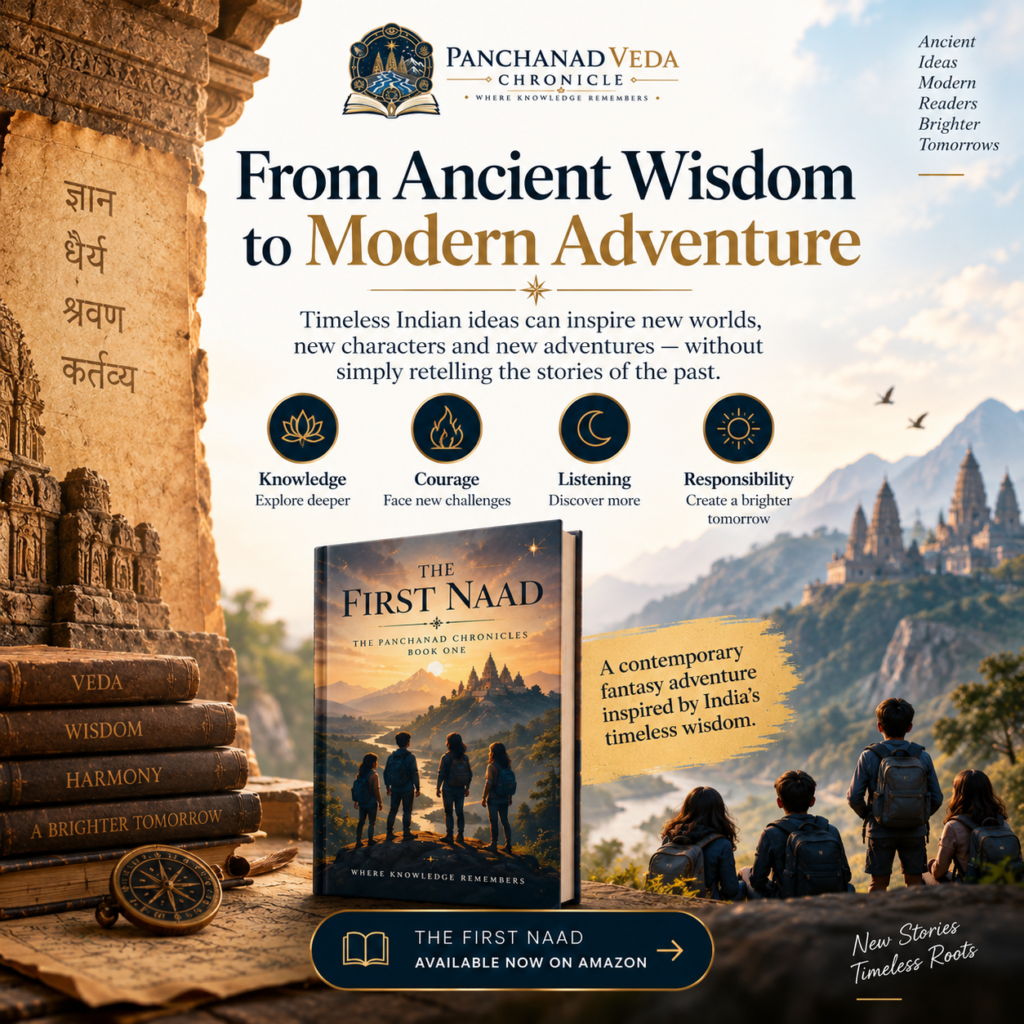
The First Naad Receives a 5-Star Amazon Review: An Indian Fantasy Adventure Worth Discovering


A new fantasy adventure is beginning to reach readers, and there’s exciting news to share! The First Naad, Book One of The Panchanad Chronicles by Raj Kanda, has received a 5-star review on Amazon.

Set in contemporary Punjab and inspired by Hindu mythology and Vedic philosophy, this middle grade fantasy introduces young readers to a world of mysterious discoveries, friendship, courage and ancient wisdom.

Written for readers ages 8–12, The First Naad combines the excitement of a school-based mystery with a story about curiosity, responsibility and the importance of understanding the unknown.

The First Naad Amazon Review: A Promising Beginning

Receiving a five-star Amazon review is an encouraging milestone for a newly released book. It marks an early moment in the journey of a story that is now available for readers to discover.

For parents, teachers and readers exploring new middle-grade fantasy books, reviews can offer another perspective when deciding which stories to read next.

The First Naad introduces a distinctive setting, relatable young characters and mysteries that gradually unfold as the story progresses.

Rather than relying entirely on magical spectacle, the novel builds its adventure around observation, questions and the choices its characters make.

What Is The First Naad About?
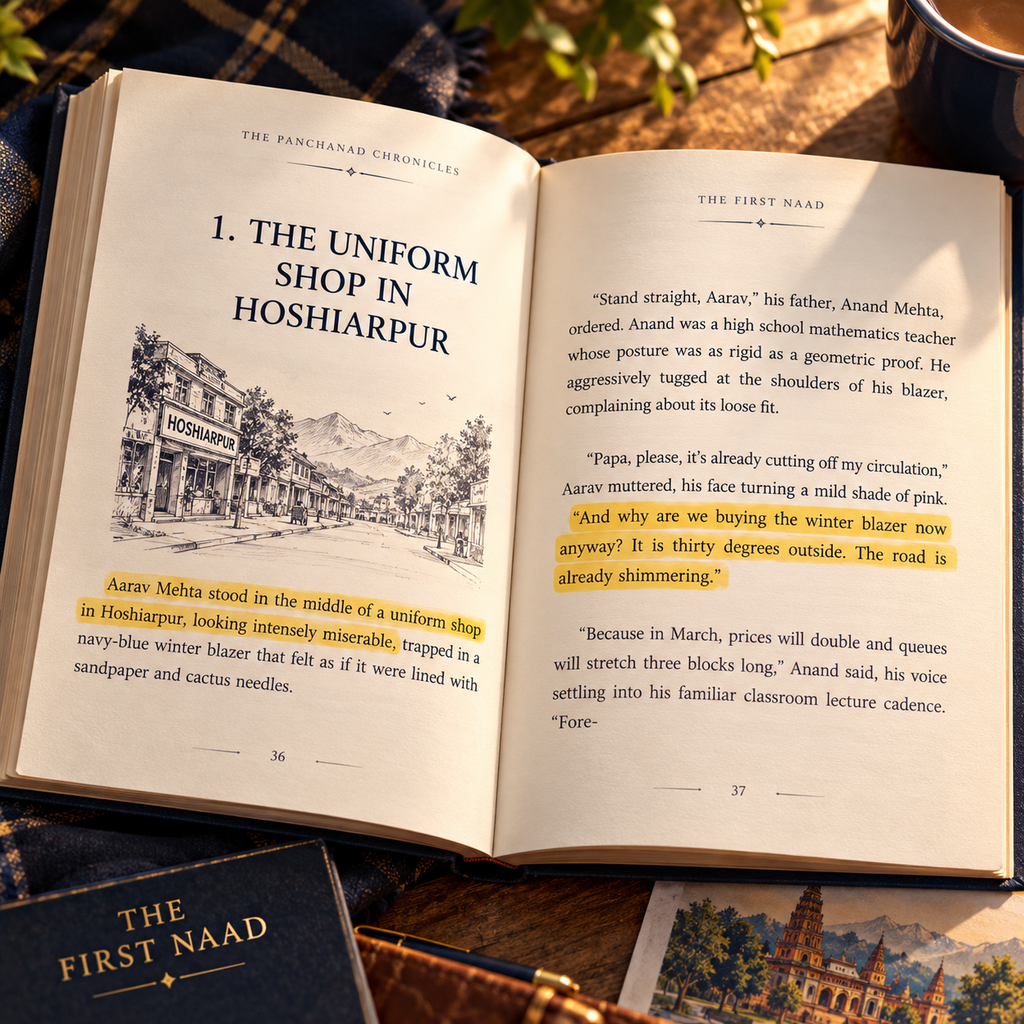
High above the Beas River, in the foothills of Punjab, stands Panchanad Veda Sthal High School.

Its admission examination is among the most challenging in the district. Its old brick corridors carry generations of history and the school’s reputation is unlike that of any ordinary institution.

When Aarav Mehta earns a place there, he expects academic challenges and the beginning of a new chapter in his life.

Instead, he encounters unusual patterns, unexplained details and three other students who see the world differently.

Together, Aarav, Veer, Kavya and Meera begin noticing things that suggest their school may be connected to something much older than anyone has explained.

What begins as an ordinary school experience slowly develops into an adventure filled with unanswered questions.

Meet the Four Friends Behind the Adventure

One of the central elements of The First Naad is the friendship between four young characters, each bringing a different strength to the group.

Aarav – The Thinker: Curious and analytical, Aarav searches for patterns and explanations, even when the answers aren’t immediately clear.

Veer – The Protector: Brave and loyal, Veer is often the first to step forward when his friends face uncertainty.

Kavya – The Listener: Compassionate and thoughtful, Kavya notices emotions and subtle details that others may overlook.

Meera – The Finder: Observant and resourceful, Meera has a talent for identifying clues and recognising things that don’t belong.

Their different personalities help create a story in which friendship isn’t simply about agreeing with one another. It’s about learning to appreciate different perspectives and working together.

What Makes This Indian Fantasy Adventure Different?

A Contemporary Indian Setting

Many popular fantasy adventures transport readers to entirely imaginary worlds.

The First Naad takes a different approach by grounding its story in contemporary India.

The landscapes of Punjab, the Beas River and the fictional Panchanad Veda Sthal High School provide a recognisable cultural and geographical foundation for the adventure.

This setting helps connect the extraordinary elements of the story with everyday experiences.

Inspiration From Hindu Mythology and Vedic Philosophy
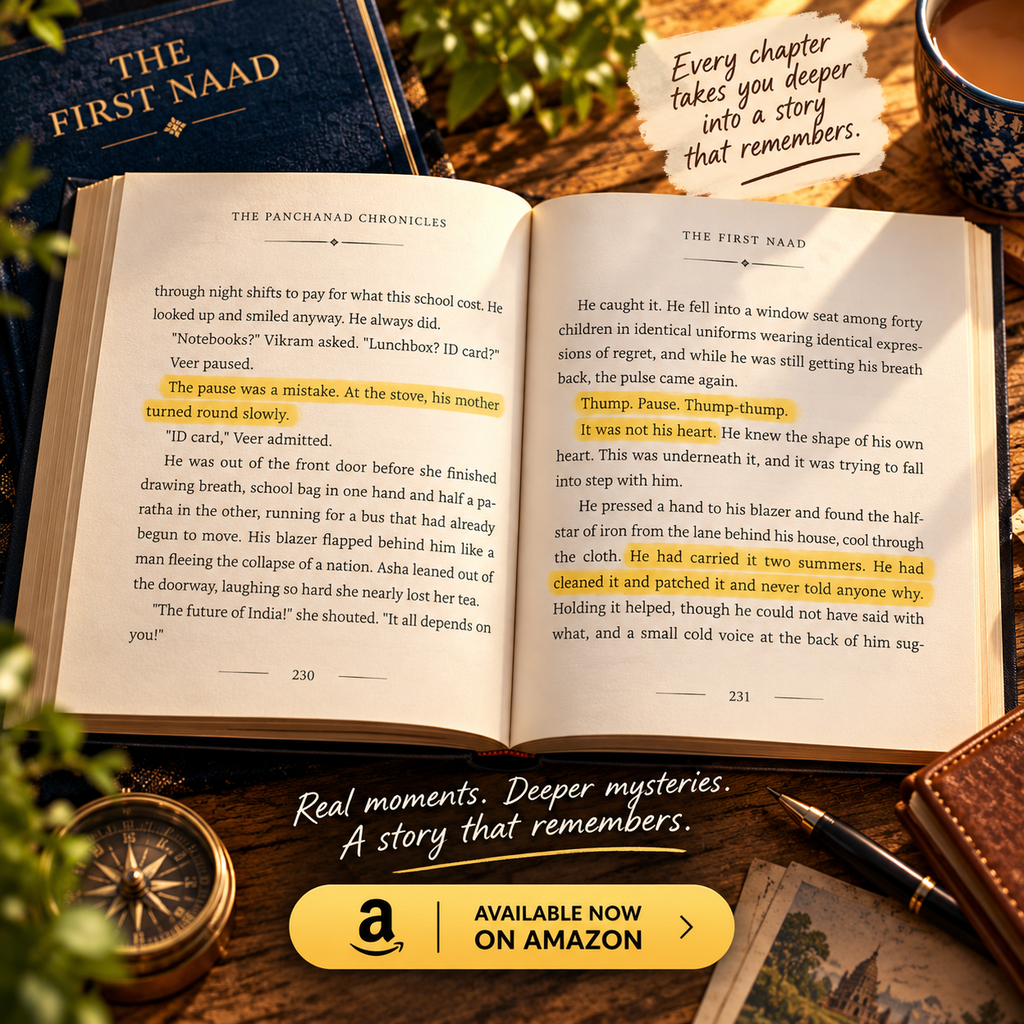
The novel draws inspiration from Indian philosophical traditions and cultural heritage while developing an original fantasy narrative.

Ideas surrounding knowledge, listening, courage and responsibility influence the story’s themes.

Instead of simply retelling ancient myths, the book explores how timeless questions can become meaningful within a modern adventure.

Mystery Beyond the Ordinary

At its heart, The First Naad asks an intriguing question:

What if the place you thought you understood was hiding something extraordinary?

The school’s unusual history, its surroundings and the details noticed by the four friends gradually build a sense of mystery.

Readers are invited to question what they know alongside the characters.

Why Middle-Grade Fantasy Matters for Young Readers

Fantasy books can offer children more than entertainment.

Through fictional adventures, young readers encounter unfamiliar situations, different perspectives and characters who must make difficult decisions.

Stories involving mystery and discovery can encourage several valuable skills:

  • Curiosity: Asking questions and exploring new possibilities.
  • Critical thinking: Looking for clues and considering different explanations.
  • Empathy: Understanding characters with different personalities and experiences.
  • Courage: Recognising when difficult situations require thoughtful action.
  • Friendship: Appreciating teamwork, trust and cooperation.

These themes are woven into The First Naad through its characters and their experiences.

For readers ages 8–12, the combination of mystery, adventure and relatable friendships offers an accessible introduction to mythology-inspired fantasy.

Discover The First Naad on Amazon

The first five-star Amazon review marks an exciting early milestone for The First Naad and the beginning of its journey into the hands of more readers.

For families looking for a new middle-grade fantasy, or readers interested in stories inspired by Indian heritage, The First Naad offers an adventure built around friendship, curiosity and discovery.

Four friends. One mysterious school. A world of forgotten knowledge waiting to be explored.

The First Naad – Book One of The Panchanad Chronicles
Best Indian Mythology Fantasy Books for Kids: Discover The First Naad


by Raj Kanda, a fantasy novel rooted in Hindu mythology and Vedic philosophy. Set in contemporary Punjab, the story follows four students who discover that their school holds secrets far older than anyone could imagine.Indian mythology fantasy books for kids offer an exciting combination of ancient legends, magical adventures, and meaningful life lessons. These stories introduce young readers to India’s rich cultural heritage while encouraging imagination, curiosity, and courage. For children who enjoy mysterious schools, hidden secrets, and unforgettable friendships, mythology-inspired fantasy can open the door to extraordinary worlds.

One such adventure is The First Naad (The Panchanad Chronicles Book 1) 

Why Indian Mythology Fantasy Books Are Worth Exploring

Fantasy literature has always fascinated children because it allows them to explore worlds beyond everyday experience. When these adventures draw inspiration from Indian mythology, they also introduce readers to cultural traditions, ancient knowledge, and philosophical questions.

Hindu mythology contains extraordinary stories about bravery, wisdom, responsibility, and the relationship between human beings and the world around them. These themes provide meaningful inspiration for modern fantasy fiction.

Rather than simply retelling familiar legends, contemporary Indian fantasy authors can create original adventures that connect ancient ideas with situations young readers recognize.

For children growing up in India or exploring Indian heritage elsewhere, these stories can offer a sense of cultural connection alongside the excitement of discovering something new.

The First Naad: A Magical School Adventure Rooted in Hindu Mythology

Imagine attending a school where every corridor seems to hold a secret and the ground beneath your feet remembers something the world has forgotten.

That is the mysterious setting of The First Naad, the opening book in The Panchanad Chronicles.

Above the Beas River, in the foothills of Punjab, stands Panchanad Veda Sthal High School. Known for its exceptionally difficult entrance examination and remarkable former students, the school has a reputation that nobody can completely explain.

Its old brick corridors have remained largely unchanged for generations. Local families speak about something unusual in the school’s atmosphere, although few seem willing to explain what they mean.

When Aarav Mehta earns admission, he expects a challenging academic experience. Instead, he begins noticing strange patterns and circular symbols that he cannot understand.

As his first term unfolds, Aarav meets three fellow students who share his sense of being different. Together, they begin questioning what lies beneath the school’s ordinary appearance.

Four Young Characters, Four Different Strengths

One of the appealing aspects of middle grade fantasy books is watching ordinary children discover that their individual qualities can become extraordinary strengths.

In The First Naad, four young characters bring different perspectives to the unfolding mystery.

Aarav Mehta-  The Thinker: Observant and analytical, Aarav records patterns, timelines, and mysterious symbols. His curiosity encourages him to look for answers where others might see coincidence.

Veer- The Protector: Veer possesses tremendous courage despite having limited financial resources. His determination demonstrates that bravery does not depend on wealth or privilege.

Kavya — The Listener: Kavya notices emotions and understands the atmosphere of a room before others recognize that something has changed.

Meera — The Finder: Meera pays attention to overlooked details, noticing things that others walk past without a second thought.

Their developing friendship reveals an important idea: understanding a mystery sometimes requires different ways of seeing the world.

How Vedic Philosophy Adds Depth to Fantasy Adventures

What distinguishes Hindu mythology-inspired fantasy from conventional magical adventures is the opportunity to explore deeper questions through storytelling.

Vedic philosophy offers a rich foundation for themes such as knowledge, awareness, self-discovery, and responsibility.

In The First Naad, the idea that knowledge can be remembered rather than simply discovered creates an intriguing foundation for the story.

The school’s hidden history suggests that ancient wisdom may still hold significance in the present.

The mystery also raises questions about observation, courage, intuition, and the responsibility that comes with uncovering forgotten information.

Rather than presenting philosophy as a classroom lesson, the novel incorporates these ideas into its atmosphere, characters, and unfolding adventure.

Why Readers Who Love Magical School Fantasy May Enjoy The First Naad

Readers who enjoy friendship-driven adventures, puzzles, and ancient Magical school adventures appeal to readers because they transform familiar experiences into unexpected discoveries.

Classrooms, friendships, teachers, and school corridors become part of a larger mystery.

The First Naad builds on this appeal while offering a distinctly Indian setting.

Its contemporary Punjab backdrop, connection to the Beas River, mysterious teacher, and loyal brown street dog create a world that feels grounded even as extraordinary possibilities emerge.

mysteries, and culturally inspired fantasy may find plenty to explore.

Parents and educators looking for Indian mythology fantasy books for kids can also consider the novel for its themes of curiosity, cooperation, courage, and respect for knowledge.

Begin Your Journey Into The Panchanad Chronicles

Every great fantasy adventure begins with a question that refuses to disappear.

In The First Naad, that question concerns a school, an ancient hill, and memories waiting to be uncovered.

As the opening installment of The Panchanad Chronicles, the novel introduces a world where friendship and ancient wisdom meet contemporary life.

For readers seeking an original Indian mythology-inspired adventure, The First Naad offers a mysterious beginning.

Discover The First Naad by Raj Kanda and enter a world where knowledge remembers.

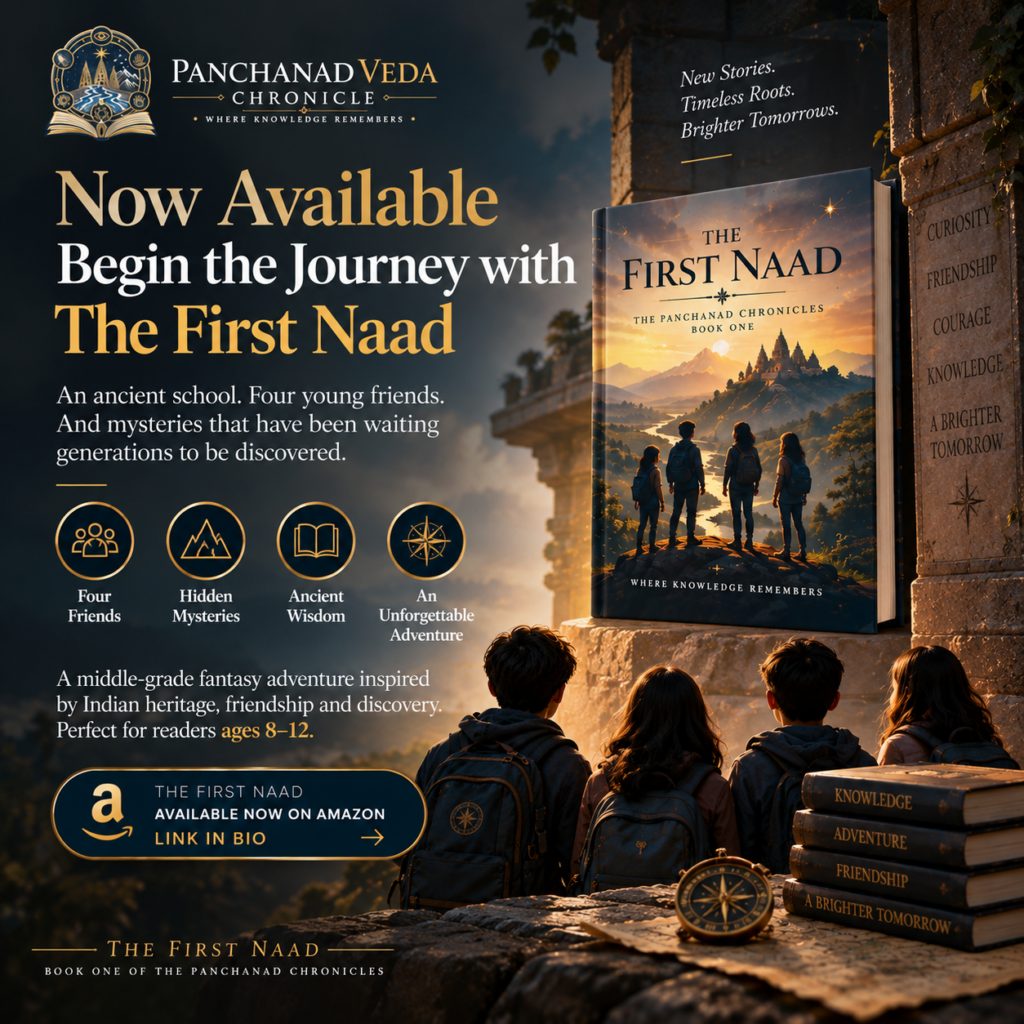
Now Available: Begin the Journey with The First Naad


What if an ordinary school year became the beginning of an extraordinary mystery?
What if the place you thought you understood was hiding questions no one had answered for generations?

And what if four young friends discovered that finding knowledge was only the beginning—because understanding what to do with it mattered even more?

The journey has officially begun.

The First Naad, Book One of The Panchanad Chronicles, is now available on Amazon, inviting middle-grade readers into an original fantasy adventure inspired by Indian heritage, ancient wisdom, friendship, curiosity and discovery.

Welcome to Panchanad Veda Sthal High School

High above the Beas River stands Panchanad Veda Sthal High School.

For Aarav, Veer, Kavya and Meera, arriving at school should mean the familiar things young students expect: classes, exams, friendships and everyday challenges.

But Panchanad Veda Sthal is not quite as ordinary as it first appears.

There are details that don’t make sense.

Questions without obvious answers.

Places that seem to hold stories far older than the students walking through them today.

And once the four friends begin paying closer attention, ignoring those questions becomes increasingly difficult.

Without giving away the mysteries waiting inside the story, The First Naad begins with a simple idea:

Sometimes the greatest adventures begin when someone notices what everyone else has overlooked.

Four Friends. Four Different Strengths.

At the centre of The First Naad are four young characters who approach the unknown very differently.

Aarav — The Thinker
Curious and analytical, Aarav wants to understand the logic behind every mystery. A question left unanswered is difficult for him to ignore.

Veer — The Protector
Brave and loyal, Veer is often ready to act when others hesitate. His instinct is to protect his friends, even when slowing down might be the wiser choice.

Kavya — The Listener
Patient and compassionate, Kavya pays attention to people and details others may overlook. She understands that sometimes the most important clues aren’t the loudest ones.

Meera — The Finder
Observant and resourceful, Meera notices what doesn’t belong. She may remain quiet until she is certain, but when she speaks, her observations can change everything.

Together, their different strengths create the heart of the adventure.

They don’t always think alike—and that is exactly why they need one another.

A Fantasy Adventure Inspired by Indian Heritage

One of the distinctive elements of The Panchanad Chronicles is the world that inspires it.

Rather than simply retelling an existing myth, the series draws creative inspiration from Indian heritage, landscapes, ancient ideas, symbols and philosophical traditions to build an original contemporary fantasy story.

The setting of Punjab and the landscape surrounding the Beas River help give the fictional world a strong sense of place.

Ideas surrounding knowledge, listening, courage, responsibility and discovery provide another layer beneath the adventure.

For young readers, this creates a world where ancient inspiration and contemporary childhood can exist side by side.

More Than a Search for Magic

Fantasy is often associated with extraordinary powers, magical objects and battles between heroes and villains.

But some of the most interesting fantasy stories begin with a different question:

What happens when you discover something you don’t fully understand?

That question matters throughout the world of The First Naad.

The four friends are naturally curious, but curiosity alone isn’t always enough. They must also learn to think about choices, consequences and responsibility.

What should you do when you uncover something important?

When should you act?

When should you listen?

When should you ask for help?

And does discovering knowledge automatically mean it should be used?

These questions allow the adventure to explore ideas that young readers can continue thinking about long after they close the book.

An Adventure for Middle-Grade Readers

The First Naad is created for middle-grade readers ages 8–12, an age when imagination and curiosity can be especially powerful.

It combines elements young fantasy readers can enjoy—friendship, mystery, exploration, hidden secrets and adventure—with themes that parents and educators may appreciate.

The story can also create opportunities for conversations about:

  • Courage and thoughtful decision-making
  • Friendship and working with different personalities
  • Curiosity and independent thinking
  • Compassion and listening
  • Responsibility and consequences
  • Indian heritage and cultural inspiration

At its heart, however, The First Naad remains an adventure.

Young readers aren’t simply being told what these values mean. They encounter characters who must navigate them for themselves.

Why Stories of Discovery Matter

Children spend much of their early lives asking questions.

Why?

How?

What happens if?

What is over there?

Stories can encourage that natural curiosity rather than asking children to leave it behind.

Mystery and fantasy are particularly effective because they transform questions into part of the reading experience. A young reader begins looking for clues, predicting outcomes and wondering what they might do in the same situation.

Reading becomes more than following a story.

It becomes participating in a discovery.

That spirit of questioning is central to The First Naad.

The Beginning of The Panchanad Chronicles

The First Naad is not simply the introduction to four characters. It is the opening chapter of the larger world of The Panchanad Chronicles.

This first adventure introduces readers to Panchanad Veda Sthal, its mysteries and the friendships that will shape the journey ahead.

There is much more waiting to be discovered.

But every journey needs a beginning.

For Aarav, Veer, Kavya and Meera, that beginning starts with curiosity—and the realisation that their school may be hiding far more than they ever expected.

The First Naad Is Available Now

If you’re a parent looking for a new fantasy adventure for your child, a teacher interested in middle-grade literature, or a young-at-heart reader who enjoys mysteries inspired by history and culture, The First Naad invites you to step into the world of The Panchanad Chronicles.

Four friends. Hidden mysteries. Ancient inspiration. One extraordinary beginning.

📖 The First Naad — Book One of The Panchanad Chronicles
Recommended for readers ages 8–12.

🛒 Available now on Amazon.

Buy The First Naad on Amazon

The Panchanad Chronicles
Where Knowledge Remembers.

From Ancient Wisdom to Modern Adventure: How Old Ideas Inspire New Stories


Some of the most exciting new stories begin with very old ideas.

Across generations, Indian traditions have explored questions about knowledge, courage, responsibility, self-discovery, listening and our relationship with the world around us. These ideas have survived not because they belong only to the past, but because many of the questions behind them remain meaningful today.

For modern storytellers, ancient wisdom can provide something incredibly valuable: inspiration.

It does not mean simply retelling an existing myth. Instead, timeless ideas can become the foundation for new characters, new mysteries and completely original adventures.

That philosophy sits at the heart of The Panchanad Chronicles and its first book, The First Naad.

Ancient Ideas Don’t Have to Stay in Ancient Stories

When we think about mythology or ancient traditions, it is easy to imagine stories belonging to another time—distant kingdoms, legendary figures and events passed down over generations.

But the ideas within those traditions can still speak to modern readers.

What does it mean to have courage?

When should we act, and when should we listen?

Does knowledge bring responsibility?

How do we decide what is right when there is no simple answer?

These questions are not limited to one period of history. They are just as relevant to a young reader today as they were to generations before.

Contemporary fantasy provides an opportunity to explore them in a completely new setting.

Inspiration Is Different From Retelling

There is an important distinction between retelling an ancient story and creating something new from the ideas it inspires.

A retelling takes an existing narrative and reinterprets it.

An inspired story can take broader concepts—philosophy, symbolism, landscapes, cultural memory and ways of thinking—and use them as creative foundations for an original world.

This gives writers the freedom to ask:

What could an ancient idea mean to a child living today?

How might traditional concepts influence a modern mystery?

Could something associated with history become the beginning of a completely new adventure?

The result can feel connected to cultural heritage while still giving readers a story they have never encountered before.

Symbols Can Carry Stories Across Generations

Symbols are another powerful bridge between ancient ideas and contemporary storytelling.

Fire can suggest courage or transformation.

The sun can represent clarity and illumination.

The moon can evoke patience, reflection and calm.

Rivers can represent movement, connection and memory.

Sound can lead us towards ideas about listening, communication and knowledge.

A fantasy writer can take inspiration from these associations without turning them into literal explanations.

Instead, symbols can quietly enrich a fictional world, giving readers something deeper to discover beneath the adventure.

Ancient Wisdom Can Ask Modern Questions

One of the most interesting possibilities in fantasy is using an extraordinary situation to explore a very ordinary human decision.

Imagine discovering something that has been hidden for generations.

The obvious fantasy question might be:

“What can it do?”

But perhaps the more interesting question is:

“What should you do with it?”

That small shift changes the story.

Knowledge is no longer simply a reward for solving a mystery. It comes with responsibility.

For young readers, questions like these can introduce ideas about consequences, judgement and personal values without making a story feel like a lesson.

The adventure remains exciting, but there is something meaningful underneath it.

Bringing Indian-Inspired Fantasy Into a Contemporary World

India offers an extraordinary landscape for fantasy storytelling.

Its rivers, mountains, architecture, languages, traditions, philosophies and thousands of years of cultural history provide countless sources of creative inspiration.

Yet Indian-inspired fantasy does not always have to take place in an ancient kingdom.

What happens when that sense of history exists alongside classrooms, school friendships and everyday childhood?

That contrast can create something distinctive.

A modern young character can encounter an idea with roots far older than anything they know. Familiar places can suddenly contain unfamiliar questions.

The past and present begin to exist beside one another.

The World Behind The First Naad

This approach helps shape the world of The First Naad, Book One of The Panchanad Chronicles.

The story is set in contemporary Punjab and follows four young friends—Aarav, Veer, Kavya and Meera—at Panchanad Veda Sthal High School.

They are modern children with different personalities and instincts.

Aarav wants to understand.

Veer is ready to act.

Kavya listens.

Meera notices what others overlook.

Around them is a world influenced by Indian heritage, landscape and ancient ideas—but their adventure is an original one.

The story is not simply about uncovering something old. It asks what happens when a new generation encounters knowledge it does not yet fully understand.

Knowledge, Courage, Listening and Responsibility

Four ideas are particularly important to the wider world of The Panchanad Chronicles.

Knowledge encourages us to look deeper rather than accepting only what appears on the surface.

Courage is not simply fearlessness. Sometimes it means making a difficult decision despite uncertainty.

Listening reminds us that understanding does not always come from speaking or acting first.

Responsibility asks what we should do with what we learn.

Together, these concepts create possibilities for adventure while also giving young readers ideas they can continue thinking about after the story ends.

Why Cultural Inspiration Matters for Young Readers

Stories can be both windows and mirrors.

For some young readers, Indian-inspired fantasy can provide an opportunity to see elements of heritage, landscape and cultural thought reflected in an imaginative adventure.

For others, it can provide a window into ideas and settings they may not have encountered before.

Both experiences matter.

Fantasy has always allowed readers to travel beyond the familiar. Expanding the cultures, philosophies and traditions that inspire those imaginary worlds only gives young readers more places to explore.

New Stories, Timeless Roots

Ancient wisdom does not need to remain behind museum glass or within the pages of history.

It can inspire questions.

It can inspire characters.

It can inspire imaginary worlds.

And it can help storytellers create adventures that feel both new and connected to something much older.

That is part of the idea behind The Panchanad Chronicles: timeless inspiration, contemporary characters and an entirely new adventure for today’s young readers.

Begin the Adventure with The First Naad

Set in contemporary Punjab and inspired by Indian heritage and ancient ideas, The First Naad introduces readers to four young friends whose ordinary school lives begin to intersect with questions that have been waiting much longer than they realise.

For parents, teachers and young readers looking for a middle-grade fantasy that combines mystery, friendship, Indian-inspired storytelling, curiosity and adventure, this is where the journey begins.

📖 The First Naad — Book One of The Panchanad Chronicles is available now on Amazon.

Buy The First Naad on Amazon

The Panchanad Chronicles
Where Knowledge Remembers.

Would You Enter a Door That Wasn’t on the School Plans?


Imagine walking through your school one ordinary afternoon.

You pass the same classrooms, corridors and staircases you have seen countless times before. Everything is familiar—until you notice something that doesn’t belong.

A door.

You are certain it wasn’t there before. It isn’t marked on any school plan. No teacher has ever mentioned it. And nobody seems to know where it leads.

What would you do?

Would you open it? Find your friends? Tell a teacher? Or decide that some mysteries are better left alone?

For young readers, questions like these are more than the beginning of an exciting story. They invite imagination, curiosity, decision-making and discussion.

And sometimes, the most memorable adventures begin with noticing the one thing everyone else has overlooked.

The Power of a Good Mystery

Mystery naturally encourages us to ask questions.

When children encounter something unexplained in a story, they don’t simply wait for the answer. They begin creating possibilities of their own.

Where does the door lead?

Why was it hidden?

Who knows about it?

Should the characters investigate?

Suddenly, the reader isn’t simply following the story—they are trying to solve it.

This active participation is one reason mystery and fantasy can be so engaging for young readers. They encourage children to observe details, remember clues, make predictions and reconsider their assumptions as new information appears.

What Would You Do?

Now return to that mysterious door.

There are several possible choices, and each reveals a different way of approaching the unknown.

🔍 Investigate It Yourself

Curiosity might win immediately.

Some young readers would want to know what is behind the door before doing anything else. That instinct reflects independence, confidence and a desire to discover answers firsthand.

But curiosity also raises another question: when should we stop and think before acting?

👥 Bring Your Friends

Perhaps investigating alone doesn’t seem like the best idea.

Bringing friends introduces cooperation. Different people notice different things, ask different questions and respond to challenges in different ways.

Sometimes the best solution appears only when several perspectives come together.

👨‍🏫 Tell a Teacher

Another reader might choose to find an adult first.

This decision introduces ideas of responsibility and judgement. Being curious doesn’t mean every mystery has to be solved alone.

Knowing when to ask for guidance can be just as important as knowing when to investigate.

🚶 Walk Away

And then there is the fourth option.

Leave it alone.

Walking away doesn’t necessarily mean being afraid. Sometimes restraint is a thoughtful choice.

But there would still be one problem:

Could you stop wondering what was behind that door?

Why Questions Make Stories More Engaging

The best mysteries don’t simply provide answers. They make readers want to discover those answers for themselves.

This can be particularly valuable for children because it transforms reading into an active experience.

Instead of asking only, “What happens next?”, young readers begin asking:

Why did that happen?

What am I missing?

Would I have made the same choice?

What could this clue mean?

Those questions exercise imagination and critical thinking while keeping the experience entertaining.

For parents and teachers, mystery stories can also create opportunities for conversation. Asking a child what they would do in a character’s situation can lead to discussions about courage, friendship, responsibility, curiosity and consequences.

There isn’t always one correct answer—and that is part of what makes the conversation interesting.

A School Where Things Don’t Always Add Up

Mystery is at the heart of The First Naad, Book One of The Panchanad Chronicles.

Aarav, Veer, Kavya and Meera arrive at Panchanad Veda Sthal High School expecting the familiar rhythms of school life: classes, friendships, exams and everyday challenges.

But gradually, they begin noticing things that don’t quite fit.

The four friends approach the unexplained in very different ways.

Aarav wants to understand.

Veer is ready to act.

Kavya listens carefully.

Meera notices details others might overlook.

Those differences become important because discovering a mystery is only the beginning. The harder question is deciding what to do next.

Curiosity, Courage and Responsibility

Adventure stories often celebrate curiosity—and for good reason.

Curiosity encourages young people to explore ideas, ask questions and look beyond what seems obvious.

But The First Naad also explores another side of discovery: responsibility.

What happens when you learn something you weren’t expecting to find?

Should every secret be uncovered?

Does discovering something give you the right to use it?

And how do you decide what to do when your friends don’t all agree?

These questions allow an adventure to become more than a search for answers. They give young readers space to think about judgement, friendship and the consequences of their choices.

Sometimes the Smallest Detail Starts the Biggest Adventure

A strange mark.

An unexplained sound.

A detail on an old map.

A door that shouldn’t exist.

Great mysteries don’t always begin with something enormous. Sometimes they begin because one person stops, looks again and asks:

“Wait… was that always there?”

For young readers, that moment can open an entire world of imagination.

And at Panchanad Veda Sthal High School, paying attention may be more important than anyone initially realises.

What Would You Choose?

So imagine yourself standing in that corridor again.

The unfamiliar door is in front of you.

Nobody else seems to have noticed it.

You have four choices:

🔍 Investigate it yourself
👥 Bring your friends
👨‍🏫 Tell a teacher
🚶 Walk away

Which would you choose?

Perhaps your answer says something about the kind of adventurer you would be.

Discover the Mystery in The First Naad

Set in contemporary Punjab and inspired by Indian heritage, ancient wisdom, friendship and discovery, The First Naad begins a middle-grade fantasy adventure centred on four young friends and a school with mysteries of its own.

📖 The First Naad — Book One of The Panchanad Chronicles is available now on Amazon.

Buy The First Naad on Amazon

The Panchanad Chronicles
Where Knowledge Remembers.

Hindu Mythology Books for Kids | The Panchanad Chronicles


Why Hindu Mythology Belongs on Every Kid’s Bookshelf: Inside The Panchanad Chronicles

Walk into any bookstore’s middle-grade fantasy section and you’ll find the same landscape repeated on shelf after shelf: wizarding schools tucked into the English countryside, gods borrowed from Greek myth, camps hidden in the American woods. It’s a landscape millions of kids love — but it’s also a strangely narrow one, given how many mythologies exist in the world and how rarely they get the same treatment.

A new wave of Hindu mythology books for kids is starting to change that, and it’s overdue. Readers between 8 and 12 are hungry for stories that feel both magical and personal — stories where the myths aren’t a costume borrowed for a weekend, but a living tradition the characters actually belong to. For millions of Indian families, and for curious readers everywhere, that kind of story material has been sitting in plain sight for thousands of years: in the Vedas, in sacred rivers, in fire, sun, and moon, in the idea that sound itself can carry memory.

That’s the space The Panchanad Chronicles steps into — a Hindu-inspired middle-grade fantasy series that treats Indian culture not as a footnote or a sprinkle of flavor, but as the entire architecture of its world.

The Gap in Children’s Fantasy That Nobody Talks About

For years, the unspoken rule of children’s publishing has been that “universal” stories are the ones set in familiar Western settings, while culturally specific stories are “niche.” That rule has quietly shaped what gets published, what gets marketed hard, and what ends up on school reading lists.

But representation in fantasy isn’t just about seeing a character who looks like you. It’s about seeing your cosmology — your gods, your rivers, your philosophy of duty and consequence — treated as worthy of the same epic scale as Olympus or Asgard. For Indian and diaspora children, that recognition can be quietly transformative. For readers outside that culture, it’s an invitation into a vast, largely unexplored corner of world mythology, written with the same craft and pacing as the fantasy series they already love.

This is precisely the gap The Panchanad Chronicles was written to fill.

What Actually Makes a Great Mythology-Inspired Fantasy for Kids?

Not every book that name-drops a god or a sacred river earns the label of culturally rooted storytelling. A lot of mythology-adjacent fiction treats ancient tradition as set dressing — a temple here, a Sanskrit word there — without letting it shape anything that actually happens. The strongest entries in this genre tend to share a handful of qualities:

  • Real symbolism, not surface decoration. The mythology should shape the plot’s structure and stakes, not just decorate the cover art or chapter headers.
  • Characters kids can actually see themselves in. Young protagonists who make real choices and face real consequences, not passive observers being guided through a theme park of “ancient magic.”
  • Emotional stakes alongside magical ones. Fear, grief, friendship, jealousy, and responsibility need to matter as much as spells, sacred fire, or hidden doors.
  • Respect for the source material. Concepts drawn from real philosophy and scripture, handled with care rather than flattened into generic “eastern mysticism.”
  • A world that rewards curiosity. Details that make a re-read worthwhile — a hidden meaning in a name, a ritual that pays off three chapters later.

The Panchanad Chronicles was built deliberately around these principles, rather than backed into them after the fact.

Inside The Panchanad Chronicles: A World Between Five Rivers

The story is set at Panchanad Veda Sthal High School, an institution that sits above the Beas River and looks, on the surface, like any other boarding school — red brick, a clock tower, quiet courtyards. Four children arrive expecting nothing more dramatic than exams, friendships, and cricket matches.

What they find instead is that the stories their families told them growing up were never only stories. Behind the school’s ordinary arches, something far older is waiting — a forgotten sound, a naad, that should never have been allowed to wake.

Three Mandirs, Three Sacred Paths

Beneath three towers overlooking the school lie three sealed mandirs — sunken into the hill, with no visible doors and no windows. Each one guards a different trial, and each trial demands something different of the children who face it:

  • Mandir of Fire (Agni) — where courage is forged and the will is tempered by sacred flame. This is not simply a test of bravery; it’s a test of what a child is willing to risk, and why.
  • Mandir of Sun (Surya) — where light reveals what the day has kept hidden, and clarity has to be earned rather than given freely. Nothing here comes easy — understanding is a process, not a reward handed out for showing up.
  • Mandir of Moon (Chandra) — where patience is learned in silence, and memory keeps what the world has chosen to forget. Of the three, this is the trial that asks the most of a child used to acting quickly.

Each mandir becomes a genuine narrative trial the children must move through, not a set piece dropped in for visual effect — which is exactly what separates real Vedic storytelling from mythology used as wallpaper.

Four Heroes, Four Ways of Seeing the World

Great middle-grade fantasy tends to live or die on its characters, and The Panchanad Chronicles deliberately avoids the “one chosen hero” formula in favor of four equal protagonists, each carrying a different way of engaging with the world:

  • Aarav, the Thinker — methodical and careful, and constitutionally incapable of leaving a question unanswered. He’s usually the one who works out what everybody else missed.
  • Veer, the Protector — courageous and quick to act, whose bravery keeps the group safe even as his impatience puts them in danger.
  • Kavya, the Listener — calm and observant, noticing what everyone else walks straight past. She’s the quiet reason the group holds together.
  • Meera, the Finder — the one who sees the seam in the stone and the door that shouldn’t exist. When she speaks, everything changes.

This structure gives young readers multiple entry points into the story rather than a single idealized hero to admire from a distance. A thinker, a fighter, a listener, and a finder — nearly every child reading along can find a character whose instincts mirror their own, and that identification is often what turns a casual reader into someone who finishes the whole series.

The Emotional Core Beneath the Adventure

What separates this from a purely plot-driven adventure is the emotional throughline running underneath it. Book One, The First Naad, follows a clear arc: the arrival, the summons, the trials, and finally the choice — and that final stage is where the story earns its weight. The four children discover that power meant purely to wound is no power at all, and what they ultimately carry home is something quieter than a sword or a spell: a form of strength that demands far more of them to hold onto than to wield.

That’s a sophisticated idea to hand an eight-year-old, and it’s handled without ever turning into a lecture — which is precisely the balance mythology-inspired fiction has to strike to actually work for its intended age group.

Why Parents and Educators Are Paying Attention

Beyond the adventure itself, The Panchanad Chronicles is deliberately built as a book parents don’t have to think twice about handing over, and one educators can actually use:

  • Rooted in Dharma. Ancient values of duty, respect, and quiet resolution are told in a contemporary, genuinely thrilling children’s fantasy voice — not delivered as a moral appended to the end of a chapter.
  • Screen-free wonder. An immersive, mystery-laden school adventure built to naturally pull young readers away from short-form feeds, competing with scrolling on its own terms rather than lecturing kids about screen time.
  • Discussion-ready structure. Each chapter creates a natural opening to talk about duty, courage, loyalty, and the ethics of power — useful for a classroom read-aloud or a bedtime conversation alike.
  • Safe by design. A safe, ad-free middle-grade experience rooted in Indian culture, with strict adherence to privacy compliance for young readers and their families.

For teachers looking to bring Indian culture and mythology into the classroom without reducing it to a textbook unit, this is precisely the gap the series is written to fill — a story that teaches by immersion rather than by explanation.

Who This Series Is For

The Panchanad Chronicles is aimed at readers aged 8 to 12, which puts it squarely in the same category as the fantasy series that dominate that age group’s reading lists. But its appeal reaches wider than that core age band in a few specific ways:

  • Indian and diaspora families looking for a fantasy adventure that reflects their own cultural and spiritual heritage back at their children, rather than asking them to find themselves in someone else’s mythology.
  • Parents and educators searching for values-driven fiction that handles duty, courage, and consequence with nuance instead of simplification.
  • General fantasy readers, regardless of background, who are simply looking for a well-built new world with real stakes, distinct characters, and mythology they haven’t already encountered a dozen times.
  • Classrooms and reading groups wanting discussion-ready material that opens naturally into conversations about ethics, culture, and character.

Why This Matters Beyond One Book

Representation in children’s fantasy isn’t a trend — it’s overdue, and it matters for reasons that go beyond any single title. For Indian and diaspora children, seeing sacred rivers, mantras, and Vedic philosophy treated with the same narrative weight as Hogwarts or Camp Half-Blood sends a quiet but powerful message: your mythology is epic enough to carry the main story, not just a supporting role in someone else’s. For readers outside that culture, it’s an invitation into a rich, largely unexplored corner of world mythology, told with the same craft, pacing, and emotional stakes as the fantasy series they already love.

That’s the gap The Panchanad Chronicles is written to fill — one mandir, one river, one mantra at a time.

Frequently Asked Questions

What age group is The Panchanad Chronicles written for? The series is written for middle-grade readers aged 8 to 12, and works well as a family read-aloud for younger siblings too.

Is The Panchanad Chronicles based on real Hindu mythology? It’s inspired by real Vedic concepts — Agni, Surya, Chandra, mantra, and naad — woven into an original fantasy story rather than a direct retelling of a single myth.

Is the book safe and age-appropriate for children? Yes. It’s designed as a safe, ad-free adventure with strict privacy compliance, built to encourage healthy discussion around courage, duty, and the ethics of power.

Is The Panchanad Chronicles published yet? Book One, The First Naad, is complete and currently open to literary representation and publishing enquiries.

Can teachers use this in the classroom? Yes — the story is discussion-ready by design, and a dedicated resource guide is available for parents and educators.


Ready to step above the Beas River? Discover the full story, meet the four heroes, or register your interest to be the first to know when The Panchanad Chronicles is published.

Best Fantasy Books Based on Indian Mythology


Best Fantasy Books Based on Indian Mythology (2026)


Best Fantasy Books Based on Indian Mythology: A Complete 2026 Reading Guide

From sweeping adult epics to screen-free adventures for kids — here’s where to start with fantasy fiction rooted in Hindu and Indian mythology.

Indian mythology may be the richest, least-mined source material in modern fantasy fiction. While Greek and Norse myths have been retold hundreds of times over the last decade, the epics of the Ramayana, the Mahabharata, and the vast body of Puranic and Vedic lore are only just beginning to reach the global fantasy shelf — and readers are noticing.

If you’ve finished Percy Jackson and want something rooted in a different tradition, or you grew up hearing stories of Hanuman, Krishna, and the Pandavas from your grandparents and want to see them reimagined as full-blown fantasy, this guide is for you. Below, we’ve organized the best fantasy books based on Indian mythology by reading age and style, so you can find exactly the kind of story you’re looking for — whether that’s a sprawling adult epic or a screen-free adventure for your 8-year-old.

Why Indian Mythology Is Fantasy Fiction’s Next Big Wave

Indian mythology offers something most Western fantasy readers haven’t encountered before: gods who are morally complex rather than simply “good” or “evil,” cosmic timescales that dwarf typical fantasy world-building, and a philosophical backbone — dharma, karma, cyclical time — that gives stories weight beyond the usual quest narrative.

Publishing has caught on. Authors like Amish Tripathi, Roshani Chokshi, and Vaishnavi Patel have shown that retellings and original fantasy inspired by Hindu, Vedic, and regional Indian folklore can top bestseller lists both in India and internationally. And a new generation of middle-grade and YA authors is now bringing this same tradition to younger readers, giving kids heroes who look like them and stories that reflect their own cultural inheritance.

What Makes a Great Indian Mythology Fantasy Book?

Before diving into the list, it’s worth knowing what separates a strong entry in this genre from a weak one:

  • Original world-building, not just a retelling. The best books use mythology as a launching pad rather than simply narrating the epics scene-for-scene.
  • Cultural accuracy with room to imagine. Respecting the source material while still creating new characters, stakes, and magic systems.
  • Accessible to newcomers. A great book shouldn’t require you to already know the Ramayana or Mahabharata to enjoy it.
  • Emotional stakes beyond spectacle. Courage, duty, friendship, and family — themes that echo the dharmic core of the original epics.

Best Fantasy Books Based on Indian Mythology for Adults

1. The Shiva Trilogy — Amish Tripathi

(The Immortals of Meluha, The Secret of the Nagas, The Oath of the Vayuputras)
The book that arguably launched India’s modern mythological-fantasy boom. Amish reimagines Shiva not as a god from birth, but as a Tibetan immigrant tribal chief who becomes the Mahadev through his choices. Dense, philosophical, and packed with world-building.

2. Ram Chandra Series — Amish Tripathi

(Scion of Ikshvaku, Sita: Warrior of Mithila, Raavan: Enemy of Aryavarta, War of Lanka)
A multi-perspective retelling of the Ramayana that gives Sita and Raavan just as much narrative weight as Ram — recasting familiar characters as complex, flawed people caught in a larger cosmic conflict.

3. Asura: Tale of the Vanquished — Anand Neelakantan

The Ramayana told entirely from Raavan’s point of view. A bold, morally inverted take that asks what “villain” even means when the story is told by the other side.

4. The Palace of Illusions — Chitra Banerjee Divakaruni

The Mahabharata reimagined through Draupadi’s eyes — lyrical, feminist, and one of the most acclaimed literary retellings in the genre.

5. Kaikeyi — Vaishnavi Patel

An internationally bestselling reimagining of the Ramayana’s most vilified queen, blending court politics, quiet magic, and a sharp feminist lens.

6. The Aryavarta Chronicles — Krishna Udayasankar

A near-future-feeling take on the Mahabharata that strips away divine intervention and reframes the epic as political thriller and war fantasy.

Best YA Fantasy Books Inspired by Indian Mythology

7. The Star-Touched Queen — Roshani Chokshi

A lush, romantic YA fantasy drawing on Hindu cosmology, with a heroine cursed with a horoscope that promises death and destruction — until she’s swept into the Otherworld.

8. Empire of Sand / Realm of Ash — Tasha Suri

Set in a Mughal-India-inspired world and steeped in Indian and Persian mythological influence, this duology follows a woman with forbidden magic in her blood fighting an empire built on the backs of the enslaved.

9. The Jasmine Throne — Tasha Suri

The start of the Burning Kingdoms trilogy: a princess imprisoned in a temple, a maidservant with dangerous magical powers, and richly imagined political fantasy with deep mythological roots.

10. A Spark of White Fire — Sangu Mandanna

A YA space-opera retelling of the Mahabharata, complete with a cursed princess, warring kingdoms, and a sentient spaceship standing in for a divine weapon.

11. The Star-Touched World — Roshani Chokshi

The wider Star-Touched universe expands with new heroines navigating magic, prophecy, and rebellion across linked stories and companion novels.

Best Indian Mythology Fantasy Books for Kids & Middle Grade Readers

This is where the genre has grown the fastest — and where some of the most inventive world-building is happening, because authors are building entire magic systems from scratch rather than retelling known plots beat for beat.

12. The Aru Shah Series — Roshani Chokshi

Published under Rick Riordan Presents, this series follows Aru Shah, a Mahabharata-inspired demigod who accidentally awakens an ancient demon and must save the world with a ragtag group of friends. Funny, fast-paced, and a perfect entry point for kids who love Percy Jackson.

13. The Serpent’s Secret — Sayantani DasGupta

A sixth-grader named Kiranmala discovers she’s an interdimensional demon-fighting princess, pulling directly from Bengali folktales and Hindu mythology with real heart and humor.

14. Star Daughter — Shveta Thakrar

A YA/upper-middle-grade novel blending Hindu cosmology with a coming-of-age story about a girl who is half-star, half-human, navigating a celestial court in the sky.

15. The Panchanad Chronicles — Raj Kanda

A newer addition to the genre and one worth watching closely: The Panchanad Chronicles follows four friends — Aarav, Veer, Kavya, and Meera — at a school above the Beas River where three sealed mandirs (Agni, Surya, and Chandra) hold a forgotten sound that should never have woken. Written for ages 8–12, the series is built on Hindu philosophy and Vedic symbolism, but centers its story on very grounded, relatable themes: courage, patience, friendship, and knowing when not to act. It’s designed specifically as a screen-free, discussion-ready read for classrooms and families who want mythology-rooted fantasy without needing prior knowledge of the epics to enjoy it.

The first book, The First Naad, is complete and currently open to literary representation and publishing inquiries. Read more about it here →

How to Choose the Right Book for Your Reading Age

Reader Best Starting Point
Adult, new to the genre The Shiva Trilogy or The Palace of Illusions
Adult, wants feminist retellings Kaikeyi or Asura: Tale of the Vanquished
YA reader The Star-Touched Queen or The Jasmine Throne
Middle grade (8–12) Aru Shah and the End of Time or The Panchanad Chronicles
Parent/educator seeking classroom-safe fantasy The Panchanad Chronicles — see the Parents & Educators guide

Final Thoughts

Fantasy based on Indian mythology isn’t a niche anymore — it’s one of the most creatively fertile spaces in the genre right now, spanning literary adult fiction, romantic YA, and screen-free middle-grade adventure. Whichever entry point you choose, you’re tapping into thousands of years of storytelling that’s only just beginning to be reimagined for modern readers.

Want to follow along as a brand-new addition to this genre takes shape?

Register Interest in The Panchanad Chronicles

Frequently Asked Questions

What are the best fantasy books based on Indian mythology?

Some of the most acclaimed titles include the Shiva Trilogy and Ram Chandra Series by Amish Tripathi, The Palace of Illusions by Chitra Banerjee Divakaruni, Kaikeyi by Vaishnavi Patel, and Asura: Tale of the Vanquished by Anand Neelakantan for adult readers, plus the Aru Shah series by Roshani Chokshi for younger readers.

Are there Indian mythology fantasy books for kids?

Yes. Popular middle-grade options include the Aru Shah series, The Serpent’s Secret by Sayantani DasGupta, and newer series like The Panchanad Chronicles, which is written specifically for ages 8–12 and draws on Hindu philosophy and Vedic symbolism.

Do I need to know the Ramayana or Mahabharata before reading these books?

No. The best books in this genre are written to be accessible to newcomers — they introduce mythological concepts and characters within the story itself, so no prior background is required.

What’s the difference between a mythological retelling and mythology-inspired fantasy?

A retelling closely follows the plot of an existing epic (like the Ramayana or Mahabharata) from a particular character’s point of view. Mythology-inspired fantasy borrows gods, cosmology, or symbolism to build an original story and world, as seen in books like The Star-Touched Queen or The Panchanad Chronicles.

Is Indian mythology fantasy the same as Hindu mythology fantasy?

Not exactly. “Indian mythology” is a broader term covering Hindu, Buddhist, Jain, and regional folk traditions across the subcontinent. Most bestselling titles in this genre draw primarily from Hindu mythology and Vedic tradition, but authors increasingly pull from Persian, Mughal-era, and regional folklore too.

Fantasy Books: The Ultimate Guide to the Best Fantasy Books, Fantasy Books for Teens, and Mythology-Inspired Adventures


Fantasy Books: Why Millions of Readers Can’t Get Enough of Them

Fantasy books continue to dominate bestseller lists, online communities, school libraries, and personal reading lists around the world. From magical schools and hidden kingdoms to ancient prophecies and heroic adventures, fantasy gives readers something unique: the chance to explore worlds where imagination has no limits.

Whether you’re searching for the best fantasy books, looking for exciting fantasy books to read, exploring dark fantasy books, or trying to discover engaging fantasy books for teens, this guide will help you navigate one of literature’s most beloved genres.

Fantasy is more than escapism. The greatest fantasy stories explore courage, friendship, family, identity, sacrifice, and hope. These timeless themes are why readers return to fantasy generation after generation.


What Are Fantasy Books?

Fantasy books are stories that contain magical, supernatural, mythical, or impossible elements that do not exist in our everyday world.

Common elements include:

  • Magic systems
  • Ancient artifacts
  • Mythological creatures
  • Hidden worlds
  • Prophecies
  • Magical schools
  • Legendary heroes
  • Secret societies
  • Ancient wisdom
  • Epic battles

Fantasy allows authors to create entirely new realities while exploring very real human emotions and experiences.


Why Fantasy Books Are So Popular

The popularity of fantasy books comes from their ability to combine adventure with meaning.

Readers love fantasy because it offers:

Escapism

Fantasy transports readers beyond ordinary life into extraordinary worlds.

Wonder

The genre constantly introduces readers to new possibilities and ideas.

Emotional Growth

Fantasy heroes often face challenges that mirror real-life struggles.

Universal Themes

Fantasy explores timeless questions about courage, responsibility, friendship, and identity.

Endless Variety

From lighthearted adventures to dark fantasy epics, there is a fantasy book for every type of reader.


The Different Types of Fantasy Books

Understanding fantasy subgenres can help you find the perfect book.

Epic Fantasy

Large-scale adventures involving kingdoms, wars, prophecies, and world-changing events.

Popular Characteristics

  • Massive world-building
  • Multiple character perspectives
  • Complex political systems
  • Long-running series

Dark Fantasy Books

Dark fantasy books combine traditional fantasy with horror, mystery, and psychological tension.

Why Readers Love Dark Fantasy

  • Morally complex characters
  • Atmospheric settings
  • Unpredictable plots
  • High emotional stakes

Dark fantasy books appeal to readers who enjoy darker themes while still experiencing magical worlds.


Mythology Fantasy

Mythology-based fantasy draws inspiration from ancient traditions and cultural stories.

These books often feature:

  • Ancient gods
  • Sacred symbols
  • Legendary heroes
  • Cultural traditions
  • Historical inspiration

This subgenre continues to grow as readers seek more diverse fantasy worlds.


Middle Grade Fantasy

Middle grade fantasy is typically written for readers aged 8-12.

Common themes include:

  • Friendship
  • Courage
  • Family
  • Discovery
  • Growing up

Many of today’s adult fantasy fans first fell in love with the genre through middle grade fantasy books.


Young Adult Fantasy

Young adult fantasy focuses on teenage protagonists navigating challenges and personal growth.

Popular themes include:

  • Identity
  • First love
  • Responsibility
  • Rebellion
  • Self-discovery

Young adult fantasy remains one of the fastest-growing categories in publishing.


Best Fantasy Books: What Makes a Great Fantasy Story?

Not every fantasy book becomes unforgettable.

The best fantasy books usually include several essential ingredients.

1. Strong World-Building

Readers want to believe the world exists beyond the page.

Great fantasy worlds feel:

  • Consistent
  • Detailed
  • Immersive
  • Alive

2. Memorable Characters

Readers may forget plot details, but they remember characters.

The best fantasy protagonists are:

  • Relatable
  • Flawed
  • Courageous
  • Emotionally authentic

3. Meaningful Stakes

The greatest fantasy stories make readers care about what happens.

Good stakes aren’t only about saving the world.

They can involve:

  • Family
  • Friendship
  • Personal growth
  • Identity
  • Belonging

4. Emotional Resonance

Readers remember how a story made them feel.

The best fantasy books create moments of:

  • Wonder
  • Fear
  • Hope
  • Triumph
  • Heartbreak

Fantasy Books for Teens: A Growing Genre

Fantasy books for teens have exploded in popularity over the last decade.

Teen readers often connect deeply with fantasy because many fantasy stories explore questions that teenagers face every day:

  • Who am I?
  • Where do I belong?
  • What kind of person do I want to become?

Fantasy provides a safe way to explore these questions through adventure and imagination.


Why Parents Love Fantasy Books for Teens

Many parents appreciate fantasy because it encourages:

BenefitDescription
Reading HabitsEngaging stories motivate consistent reading
CreativityImagination develops through world exploration
Critical ThinkingComplex plots encourage analysis
EmpathyReaders understand different perspectives
Cultural AwarenessMany fantasy books draw from world traditions

How to Choose Fantasy Books to Read

Choosing the right fantasy book depends on your preferences.

If You Like Adventure

Choose:

  • Epic fantasy
  • Quest stories
  • Hero journeys

If You Like Mystery

Choose:

  • Dark fantasy
  • Magical thrillers
  • Secret-world fantasy

If You Like Mythology

Choose:

  • Mythology-inspired fantasy
  • Cultural fantasy
  • Historical fantasy

If You Like Character Development

Choose:

  • Coming-of-age fantasy
  • Middle-grade fantasy
  • Young adult fantasy

Fantasy Books Inspired by Mythology

One of the most exciting trends in fantasy today is mythology-inspired storytelling.

Readers increasingly seek stories rooted in:

  • Greek mythology
  • Norse mythology
  • Egyptian mythology
  • Hindu mythology
  • Celtic mythology
  • Japanese folklore

Mythology-based fantasy combines ancient wisdom with modern storytelling.


Why Indian Fantasy Books Are Growing

Indian fantasy books are becoming increasingly popular worldwide.

Readers are discovering:

  • Rich mythology
  • Diverse characters
  • Ancient traditions
  • Unique magical systems
  • Fresh storytelling perspectives

The fantasy genre benefits enormously from stories inspired by different cultures and traditions.


Author Insight: Why Fantasy Matters

Fantasy remains important because it teaches readers that ordinary people can achieve extraordinary things.

At its heart, fantasy is not about magic.

It is about:

  • Facing fear
  • Finding courage
  • Protecting what matters
  • Learning responsibility
  • Growing stronger through challenges

The best fantasy books stay with readers because they reflect real emotional experiences through imaginative storytelling.


Recommended Reading Journey

Beginner Fantasy Readers

Start with:

  • Middle-grade fantasy
  • School-based fantasy
  • Character-driven adventures

Intermediate Readers

Move to:

  • Young adult fantasy
  • Mythology-inspired stories
  • Adventure fantasy series

Advanced Fantasy Readers

Explore:

  • Epic fantasy
  • Dark fantasy books
  • Multi-book fantasy sagas

Explore More Fantasy Worlds

If you enjoy mythology-inspired fantasy and stories about courage, family, and ancient wisdom, you may also enjoy exploring:

Related Pages

  • The Book Series → /book-series/
  • Meet the Characters → /characters/
  • Explore the World → /the-world/
  • Parents & Educators → /parents-educators/
  • News & Updates → /news/
  • Join the Fans → /join-the-fans/

These internal links help both readers and search engines better understand your website.


Fantasy Genre Comparison Table

SubgenreBest ForAge Group
Middle Grade FantasyAdventure & friendship8-12
Young Adult FantasyIdentity & growth13-18
Epic FantasyLarge-scale worldsTeens & Adults
Dark FantasyMystery & tensionOlder Teens & Adults
Mythology FantasyCultural explorationAll Ages
Urban FantasyModern magical settingsTeens & Adults

Frequently Asked Questions About Fantasy Books

What are fantasy books?

Fantasy books are stories featuring magical, mythical, or supernatural elements that do not exist in the real world.

Why are fantasy books so popular?

Fantasy books combine adventure, imagination, emotional growth, and universal themes that appeal to readers of all ages.

What are the best fantasy books for beginners?

Character-driven fantasy with accessible world-building is often the best starting point for new readers.

Are fantasy books suitable for teens?

Yes. Many fantasy books for teens focus on friendship, courage, identity, and personal growth.

What is dark fantasy?

Dark fantasy combines fantasy elements with darker themes such as mystery, danger, horror, and moral complexity.

What is mythology fantasy?

Mythology fantasy draws inspiration from ancient myths, legends, and cultural traditions.

Why do readers enjoy fantasy worlds?

Fantasy worlds provide wonder, adventure, escapism, and opportunities to explore meaningful themes.

Are fantasy books educational?

Many fantasy books encourage creativity, critical thinking, empathy, and cultural awareness.

What age group reads fantasy books?

Fantasy appeals to all ages, from middle-grade readers to adults.

How do I choose fantasy books to read?

Choose based on your interests, whether that’s adventure, mythology, mystery, character growth, or epic world-building.

Are mythology-inspired fantasy books becoming more popular?

Yes. Readers increasingly seek fantasy stories inspired by diverse cultures and mythological traditions.

What makes a fantasy book memorable?

Strong characters, emotional depth, immersive world-building, and meaningful themes.

Hello world! 3


Hello world 2