
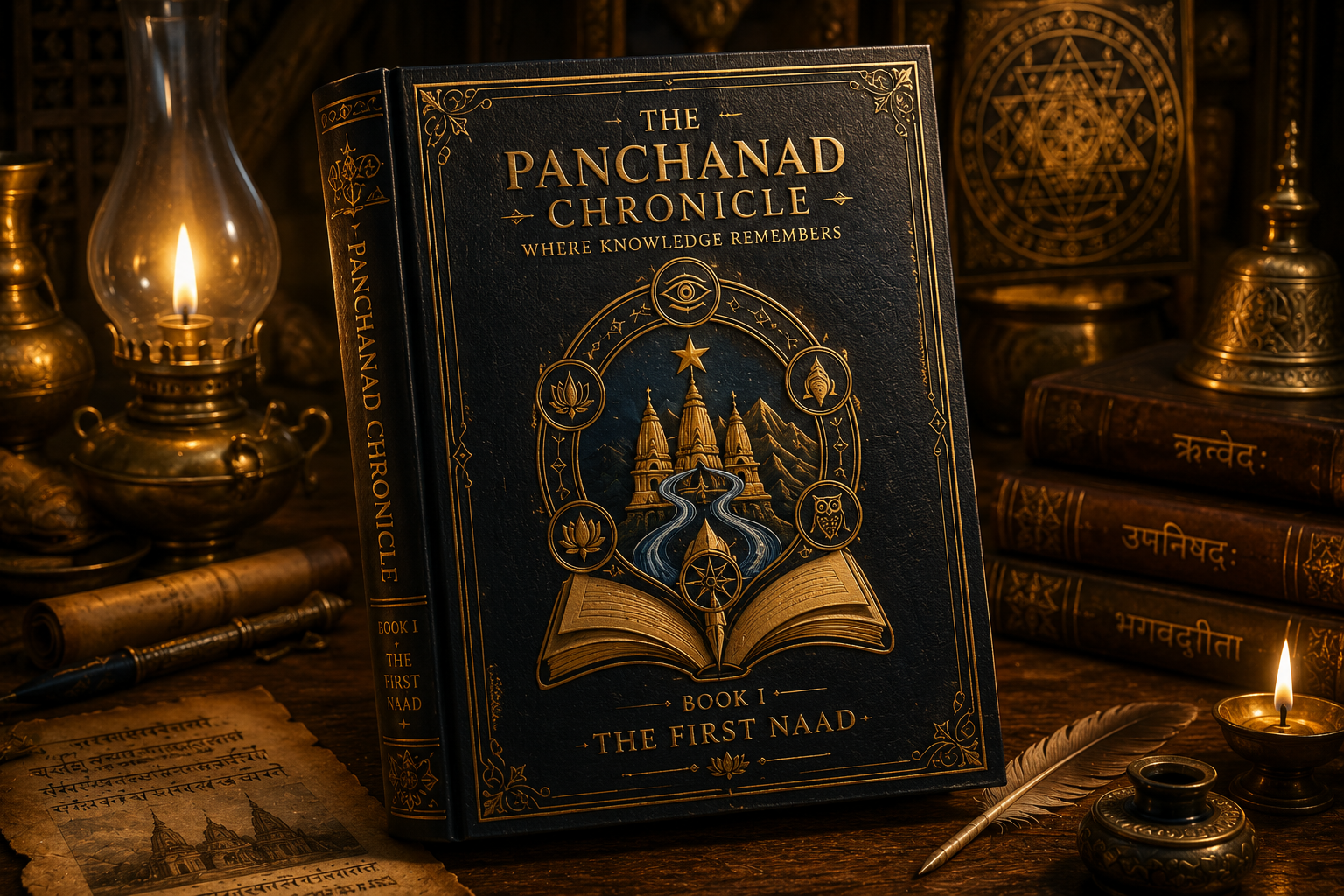
Across ten unforgettable books, readers journey alongside four courageous children as they uncover ancient mysteries hidden within Panchanad Veda Sthal High School.
What begins as an ordinary school year soon becomes an extraordinary adventure filled with forgotten secrets, sacred symbols, legendary guardians, and the enduring power of friendship. Blending magical adventure with meaningful values, the series celebrates courage, curiosity, family, responsibility, and the belief that knowledge is one of the greatest treasures we can protect.
High above the Beas River stands Panchanad Veda Sthal High School, a place where history refuses to stay silent.
When Aarav, Veer, Kavya, and Meera arrive as new students, they expect exams, friendships, cricket matches, and the excitement of starting a new chapter in life. Instead, they uncover hidden chambers, mysterious symbols, and ancient secrets connected to knowledge that has been protected for generations.
As danger grows, the four friends realise that bravery is not about possessing power. It is about making the right choices when those you care about need you most. The First Naad begins a thrilling adventure that explores friendship, courage, sacrifice, and the timeless wisdom hidden beneath the ordinary.
Every great adventure begins with unforgettable characters.

Curious, thoughtful, and determined to understand every mystery.

Fearless, loyal, and always ready to protect his friends.

Compassionate, wise, and deeply connected to the natural world.

Observant, courageous, and guided by intuition and empathy.
Together, they discover that friendship is the greatest strength of all.
Unlike traditional fantasy stories, The Panchanad Chronicles draws inspiration from India's cultural heritage, Hindu mythology, and Vedic philosophy while creating an entirely original world.
Readers will explore a hidden, detailed reality that resides underneath our contemporary daily life:
Towers, sealed library columns, and hidden courtyards.
Sacred diagrams and Vedic sound puzzles.
Old brick buildings resting above Punjab's five rivers.
Wisdom, self-restraint, and courage to protect.

The Panchanad Chronicles explores themes that resonate with readers of all ages:
Book One is only the beginning.
Each future instalment expands the world with new mysteries, unforgettable characters, and deeper adventures while remaining true to the series' heart: knowledge, courage, family, and hope. As the story grows, so too does the world of Panchanad, inviting readers to return again and again.
Become one of the first readers to explore the world of The Panchanad Chronicles. Sign up for exclusive updates, behind-the-scenes insights, cover reveals, and future book announcements.
Join the Fans