Five rivers. One historic region. Thousands of years of stories carried by water.
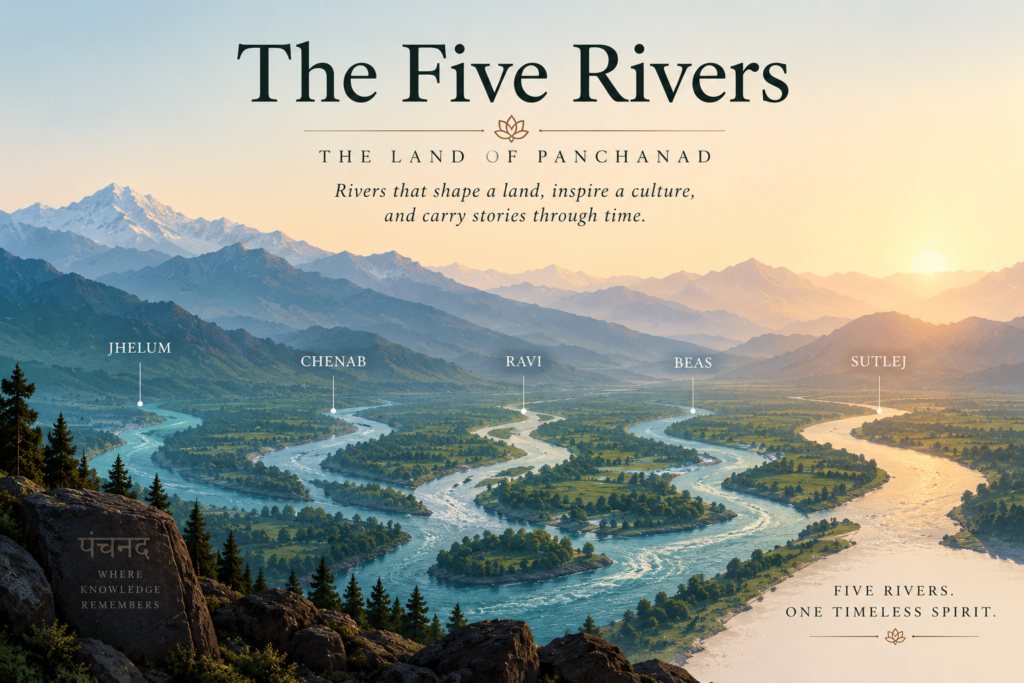
The word Panchanad evokes a landscape shaped by rivers. Derived from words associated with five and river/watercourse, the name is closely connected with the historic land of the five rivers of Punjab: the Jhelum, Chenab, Ravi, Beas and Sutlej.
These rivers are more than geographical features. For generations, they have sustained communities, shaped agriculture, influenced travel and settlement, and become woven into the history, folklore and cultural imagination of the region.
For The Panchanad Chronicles, they also provide something invaluable: a real landscape from which an entirely new fantasy world can grow.
Let us follow each of the five rivers and discover the history behind the name Panchanad.
1. Jhelum — The Ancient Vitasta
The Jhelum River begins at Verinag in the Kashmir Valley before flowing through Kashmir and onward into present-day Pakistan, eventually joining the Chenab.
In ancient Sanskrit tradition, the river is known as Vitasta, a name with deep historical and cultural associations. The river and the valley surrounding it have witnessed centuries of changing kingdoms, communities and traditions.
The Jhelum also occupies an important place in ancient history. Near its banks was fought the famous Battle of the Hydaspes in 326 BCE, when Alexander of Macedon faced King Porus.
But beyond battles and dates, the Jhelum represents something more enduring: the relationship between a river and the people who build their lives around it.
Its waters connect mountains with plains, past with present, and geography with memory.
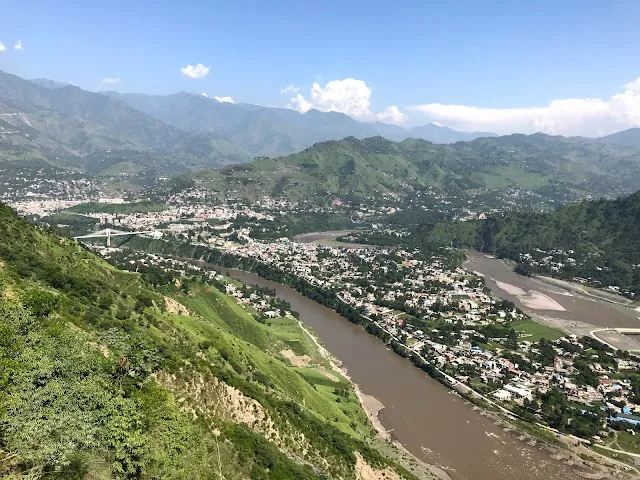
2. Chenab — The River of Legends
The Chenab is formed by the meeting of the Chandra and Bhaga rivers in the Himalayan region of Himachal Pradesh. Its ancient name, Chandrabhaga, preserves that union in language.
From the mountains, the Chenab travels westward through dramatic terrain before becoming one of the great rivers of the Punjab river system.
But geography tells only part of its story.
The Chenab has a particularly powerful presence in Punjabi folklore. It is closely associated with legendary romances, including the story of Sohni and Mahiwal, in which the river becomes part of a tale of love, separation and fate.
That relationship between landscape and storytelling is important.
A river can be something people cross, depend upon and live beside—but over generations, it can also become a character within the stories they tell.
The Chenab reminds us that landscapes do not merely witness stories. Sometimes, they become part of them.
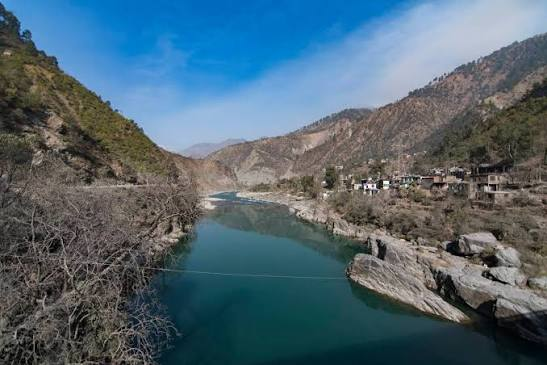
3. Ravi — A River Through Civilisations
The Ravi River, known in ancient sources as Iravati, rises in the Himalayas and flows through a region that has been home to human communities for thousands of years.
It is one of the rivers traditionally associated with the historic identity of Punjab and belongs to the wider Indus river system.
The Ravi’s story is closely tied to the long history of north-western South Asia. The wider river landscape supported ancient settlements, agricultural communities, trade and changing centres of political and cultural life.
Today, its course crosses modern political boundaries, but its historical significance belongs to a much older landscape—one that existed long before today’s borders.
That makes the Ravi a powerful reminder of continuity.
Kingdoms change. Cities grow. Borders move.
The river continues to flow.
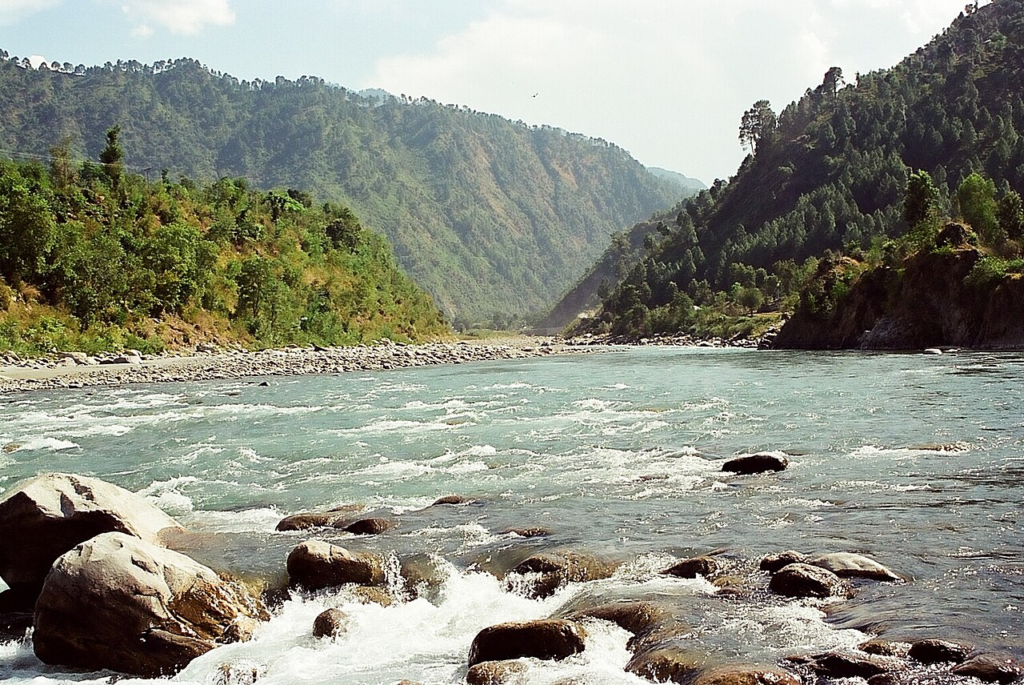
4. Beas — Where History Meets the World of Panchanad
Of the five rivers, the Beas has a particularly meaningful connection to The Panchanad Chronicles.
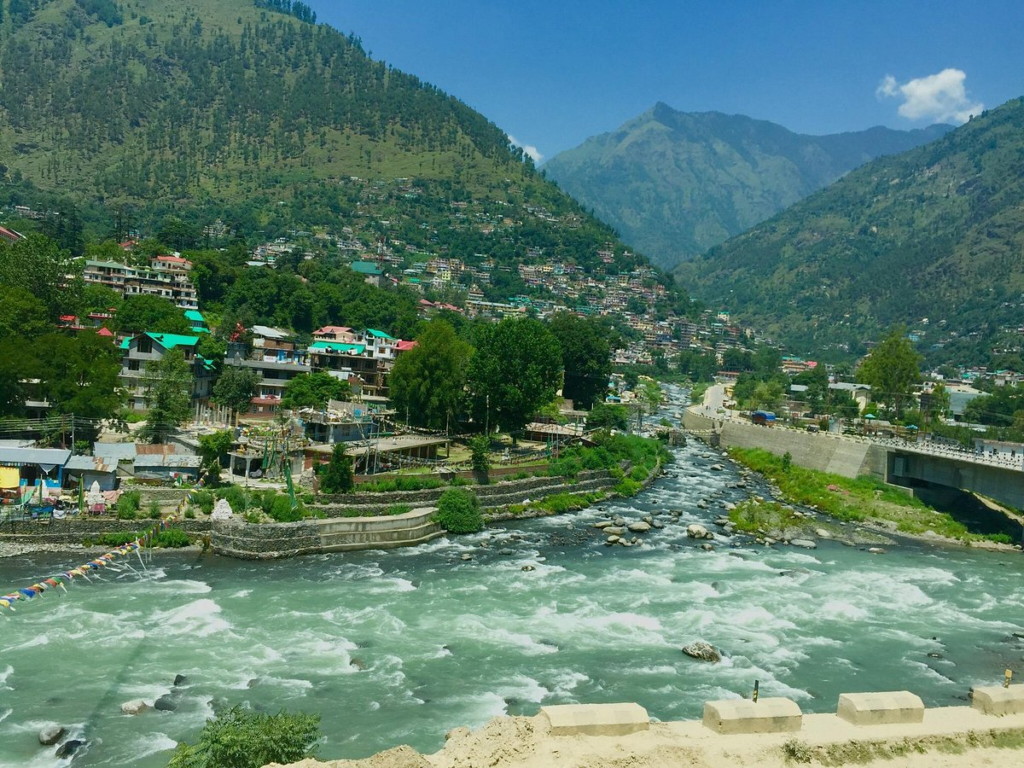
Rising near the Rohtang Pass in Himachal Pradesh, the Beas descends through spectacular Himalayan landscapes before eventually meeting the Sutlej.
In ancient tradition, the river is known as Vipasha. It has also long been associated with the sage Veda Vyasa, one of the most significant figures in India’s literary and philosophical traditions.
The Beas also holds a fascinating place in world history. In 326 BCE, Alexander’s army reached the river—known to the Greeks as the Hyphasis—and refused to continue its eastward campaign.
For The Panchanad Chronicles, however, the Beas is not simply a historical reference.
High above its waters stands the fictional Panchanad Veda Sthal High School, where Aarav, Veer, Kavya and Meera begin the journey at the heart of The First Naad.
The real landscape—with its mountains, flowing water, old routes and accumulated history—helps give the fictional world a sense that something much older might exist just beneath the ordinary.
5. Sutlej — From High Mountains to the Plains
The Sutlej is the longest of the five rivers traditionally associated with Punjab.
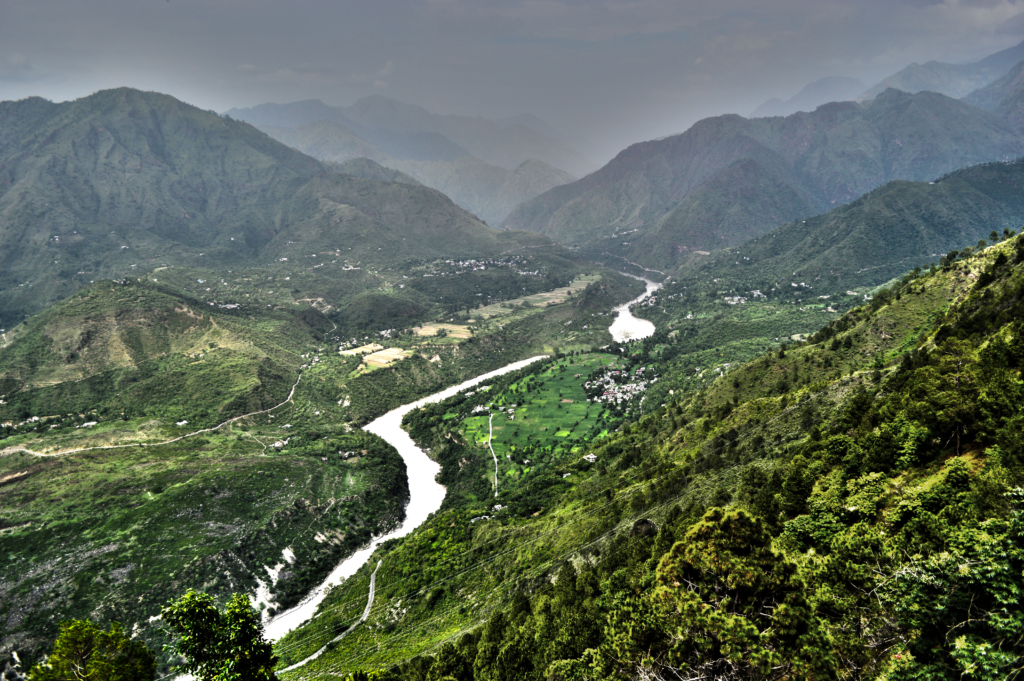
Known as Shutudri or Shatadru in ancient Sanskrit sources, it begins on the Tibetan Plateau and travels through the Himalayas before entering the Punjab plains.
Its long journey connects dramatically different landscapes—from high-altitude terrain to fertile agricultural regions.
Like the other rivers of Panchanad, the Sutlej has supported communities and shaped settlement patterns for generations. Its waters eventually become part of the greater Indus river system, demonstrating how seemingly separate rivers ultimately become connected.
That makes the Sutlej especially fitting as a symbol of movement and connection.
A river begins in one place but carries something of every landscape it passes through.
Why Are They Called the Five Rivers of Punjab?
The very identity of Punjab is connected to its rivers. Its name comes from Persian: panj meaning five and ab meaning water.
Panchanad expresses a closely related idea through an older linguistic and cultural tradition.
The five rivers commonly identified with this historic landscape are:
Jhelum • Chenab • Ravi • Beas • Sutlej
These waterways ultimately belong to the vast Indus river system, linking mountains, valleys and plains across an enormous geographical area.
Together, they helped create a landscape in which communities could grow, agriculture could flourish, journeys could be made and stories could travel from one generation to another.
More Than Water
There is something particularly powerful about rivers in storytelling.
A river is always moving, yet somehow remains recognisable.
The water passing before us today is not the water that flowed there centuries ago—and still we call it by the same name.
Perhaps that is why rivers so naturally evoke ideas of memory, continuity, transformation and time.
Those ideas resonate deeply with the world of The Panchanad Chronicles.
The series does not attempt to turn the five rivers themselves into fantasy. Instead, it draws inspiration from the extraordinary real-world landscape and cultural heritage surrounding them to imagine a contemporary world in which ancient knowledge has not entirely disappeared.
It may simply be waiting to be noticed.
Where the Rivers Flow, Stories Follow
The Jhelum, Chenab, Ravi, Beas and Sutlej have travelled through landscapes shaped by civilisations, kingdoms, communities and generations of storytellers.
Each river has its own history.
Together, they form something larger: Panchanad—the land of five rivers.
And it is within the spirit of this landscape that a new story begins.
In The First Naad, Book One of The Panchanad Chronicles, four children arrive at a school above the Beas River expecting an ordinary first term.
What they discover there has been waiting much longer than any of them realise.
Five rivers. Thousands of years of memory. A new adventure beginning.
The Panchanad Chronicles — Where Knowledge Remembers.